The Moving Market Building a Successful Moving Company Without the Heavy Fees
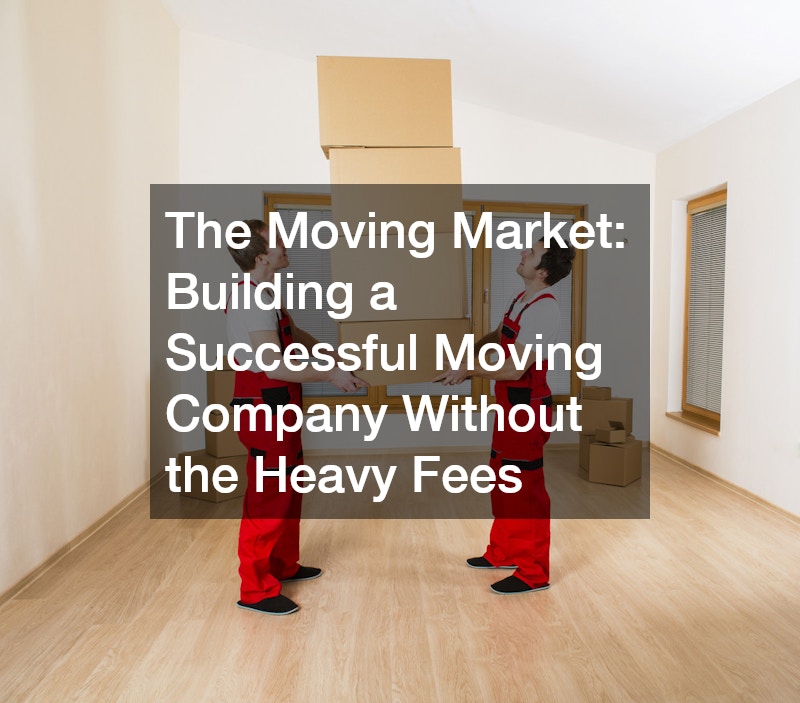
The relocation industry in 2026 is undergoing a quiet revolution. For decades, the market was dominated by massive national franchises that required hundreds of thousands of dollars in startup capital, high monthly royalties, and strict adherence to rigid corporate identities. However, the modern economy has shifted in favor of the agile, independent entrepreneur. Today, the most successful new entries into the space are not those with the biggest fleets, but those who understand how to leverage technology, specialized niches, and a lean operational model to provide superior service without the bloated overhead.
Building a moving company from the ground up is one of the few remaining paths to true financial independence that doesn’t require a specialized degree or a Silicon Valley tech stack. It is a business built on the fundamental human need for transition. Whether a family is upgrading to their first home, a corporation is shifting its headquarters, or a senior is downsizing to a more manageable lifestyle, they all require a trusted partner to handle the physical weight of their lives. This 4,800-word guide will walk you through the strategic blueprint for launching and scaling a professional relocation service that outcompetes the giants by being faster, smarter, and more personal.
Strategic Sourcing and Initial Logistics

The most common mistake new entrepreneurs make in the moving business is over-investing in equipment before they have secured their first lead. In a “lean” model, your goal is to convert fixed costs into variable costs. Instead of taking on a massive monthly payment for a 26-foot box truck that might sit idle three days a week, successful startups begin by utilizing a local trailer rental for smaller residential jobs. This allows you to scale your capacity on a day-by-day basis. If you have a studio apartment move on Monday, a small utility trailer behind a capable pickup truck is often more efficient and easier to park in dense urban environments than a massive rig.
As you move into higher-value relocations, the focus shifts from the vehicle to the protective housing of the cargo itself. To stand out from “fly-by-night” haulers, you must invest in the best shipping crates available for high-end electronics, artwork, and delicate kitchenware. Providing specialized plastic crates or reinforced wooden containers not only reduces your liability for damage claims but also serves as a powerful marketing tool. When a client sees you arrive with professional-grade, reusable crates rather than a stack of used cardboard boxes, their perception of your value—and the price they are willing to pay—immediately increases.
Agile Logistics Checklist
Variable Capacity:
Maintain accounts with several rental agencies so you can always source the exact size vehicle needed for a specific job.
Specialized Dolly Systems:
Invest in “appliance dollies” and “stair-climbing” carts to reduce physical strain on your crew and prevent floor damage.
High-Quality Moving Blankets:
Do not skimp on “skins.” Heavy, quilted pads are the primary defense against furniture scratches.
Inventory Tracking:
Use a digital tagging system to ensure that every crate is accounted for from the moment it leaves the old home to its arrival at the new one.
Loading Ramps:
Ensure every vehicle or trailer is equipped with a wide, high-traction ramp to prevent “tip-overs” during the loading process.
Defining Your Niche in a Crowded Market

In the relocation world, “generalists” often find themselves in a race to the bottom on price. To command premium rates, you must specialize in items that other moving companies are afraid to touch. One of the most profitable and underserved niches in the industry is piano moving. Moving a grand or upright piano requires a deep understanding of weight distribution, specialized skids, and the delicate nature of internal musical components. By mastering this technical skill, you transform your business from a “labor service” into a “specialty logistics firm,” allowing you to charge significantly higher margins for a single hour of work.
Another high-value niche is the corporate sector. Positioning your brand as a specialized corporate relocation company allows you to move away from the “one-off” residential client and toward recurring B2B revenue. Businesses are far less price-sensitive than individuals; they value speed, reliability, and minimal downtime above all else. If you can prove that you can move an office over a weekend and have every employee’s workstation ready for a Monday morning start, you will secure long-term contracts that provide a stable financial foundation for your growing company.
Niche Market Opportunities
Luxury Furniture Assembly:
Partner with high-end furniture showrooms to provide delivery and “white glove” installation.
Art and Antique Handling:
Focus on the specialized padding and climate-controlled transport required for high-value collections.
Gym Equipment Relocation:
Disassembling and moving power racks and treadmills requires specific tools and strength that standard movers often lack.
IT and Server Room Logistics:
Providing anti-static packing and specialized racks for moving delicate computer hardware.
Short-Term Staging:
Working with real estate agents to move furniture in and out of homes, specifically for professional photography and open houses.
Building a Brand That Competes with Industry Giants

The secret to beating national franchises is hyper-localization. While big brands have massive marketing budgets, they often struggle with a “one-size-fits-all” approach that feels impersonal. You can out-maneuver local movers who represent large chains by becoming a recognizable pillar of your specific community. This means showing up at neighborhood events, sponsoring local youth sports, and ensuring that every interaction with a client feels like a neighbor helping a neighbor. People are naturally inclined to trust a local owner-operator over a distant corporate office when it comes to their most prized possessions.
Furthermore, there is a massive and growing demographic that requires a specific type of care: the aging population. Launching senior moving services is not just a business move; it is a service to the community. Seniors and their families are often overwhelmed by the emotional and physical toll of downsizing. By training your staff in the “soft skills” of patience and empathy, and providing a comprehensive service that includes packing, unpacking, and even “floor plan visualization” for the new assisted living suite, you create a brand that is bulletproof against price-cutting competitors.
Competitive Branding Strategies
Personalized Estimates:
Offer in-home or video-chat walkthroughs rather than just automated online quotes to build a personal connection.
Uniform and Appearance:
Ensure your crew is always in clean, branded apparel. Professionalism starts with the first impression.
Review Generation:
Make it incredibly easy for happy clients to leave Google and Yelp reviews; social proof is the most effective advertising in the moving industry.
Community Partnerships:
Create a referral network with local realtors, storage unit managers, and estate attorneys.
Educational Content:
Use your blog or social media to provide “moving checklists” and “packing hacks,” positioning yourself as an expert rather than just a laborer.
Operational Excellence and On-Site Efficiency
Efficiency on the day of the move is where your profit is either protected or lost. Professional local movers understand that every minute spent searching for a roll of tape or re-adjusting a load in the truck is a minute of lost margin. Efficiency begins long before the truck arrives. It starts with a detailed “Game Plan” shared with the client, ensuring that boxes are labeled by room and that high-traffic walkways are cleared. When your team operates like a precision drill team, you not only finish faster but also leave the client with an “awe factor” that leads to referrals.
This level of precision is even more critical when you transition into the commercial space. Unlike residential clients, commercial movers are often dealing with “systematic” relocations—where the order of the items out must match the order of the items in to ensure a functional workspace. Managing the logistics of office cubicles, sensitive filing systems, and shared breakrooms requires a rigorous labeling system and a supervisor who is purely focused on the “flow” of the move rather than the heavy lifting. Mastering this operational complexity is the key to moving into the “top tier” of the market.
Beyond the initial organization, operational excellence extends to the physical maintenance of your equipment and vehicles. Even the most agile company must ensure that its fleet, whether owned or sourced through short-term equipment rentals, is in peak condition to avoid mid-job breakdowns that destroy its reputation. Implementing a strict daily inspection checklist for your tires, liftgates, and loading ramps ensures that your team can focus on the client’s transition rather than mechanical troubleshooting. This proactive approach to asset management not only protects your cargo but also significantly lowers your long-term insurance premiums by maintaining a zero-accident profile.
On-Site Operational Best Practices
Floor Protection:
Use neoprene runners or “Masonite” boards to protect hardwood and carpet. Repairing a scratched floor is more expensive than the move itself.
The “First-Box” Protocol:
Pack a “survival box” for the client containing essentials (coffee, chargers, tools, toilet paper) and ensure it is the last thing on and first thing off.
Strategic Stacking:
Load the truck like a game of Tetris—heavy items on the bottom, lighter on top, and using every cubic inch to prevent shifting.
Disassembly Services:
Always carry a fully stocked tool kit to handle bed frames and desks. Charging a small fee for this service adds up over a month.
Crew Communication:
Use hand signals or two-way radios in noisy environments or when navigating tight corners with heavy furniture.
The Tools of a Sustainable Scale-Up
As your business grows, you will eventually face the “scaling ceiling.” This is the point where you have more leads than your current crew and equipment can handle. To grow without taking on massive debt, you must continue to use the “agile” mindset. Instead of buying a third truck, look for specialized equipment rentals that allow you to take on larger, one-off projects. This keeps your monthly fixed costs low while allowing you to say “yes” to bigger contracts. Scaling is a game of balancing your “capacity” with your “consistency.”
The final step in your evolution is transitioning from a “truck owner” to a professional mover in the eyes of the law and the insurance industry. This means moving beyond basic liability and into full “cargo insurance,” “workers’ compensation,” and “DOT compliance.” While these might feel like the “heavy fees” you were trying to avoid, at scale, they are actually your greatest assets. They act as a “moat” that prevents low-quality competitors from stealing your high-end clients. Once you have the credentials, the high-value contracts—government moves, museum logistics, and white-glove residential—become accessible to you.
Scale-Up Management Strategies
CRM Automation:
Use software to track leads, send digital contracts, and collect payments. If you are still using a paper calendar, you are losing money.
Training Programs:
As you hire more staff, create a “standard operating procedure” (SOP) for everything from how to wrap a sofa to how to speak to a client.
Referral Incentives:
Create a formal program for real estate agents and apartment managers who send you consistent business.
Fleet Maintenance:
If you do decide to buy vehicles, adhere to a strict preventative maintenance schedule. A truck breakdown on move day is a brand disaster.
Financial Auditing:
Review your “profit per mile” and “profit per labor hour” monthly to identify which types of moves are actually making you the most money.
The moving market in 2026 is ripe for the independent operator who is willing to work harder and smarter than the big-box franchises. By avoiding the trap of high entry fees and instead investing in specialized skills, local trust, and operational agility, you can build a business that is both highly profitable and personally fulfilling. Success in this industry isn’t about having the shiny new truck with the famous logo; it’s about being the company that shows up on time, protects every dish as if it were an heirloom, and makes a stressful day feel manageable for a family or a business.
Remember that you are not just moving boxes; you are moving lives. Every piano you carefully wrap, and every senior you help transition into a new home, is a brick in the foundation of your professional reputation. Start small, master your niche, and stay lean. As the national chains struggle with their high overhead and disconnected labor force, your independent moving company will be there to pick up the high-margin, high-loyalty clients that make this industry so lucrative. The road is open—it’s time to start the engine and build your own relocation empire on your own terms.
